
Router Bit Guide
CNC Router Bits for Wood: Types, Features, and How to Choose the Right Cutting Tools
Jul-14-2026
CNC machines have transformed modern woodworking production by improving cutting accuracy, processing speed, and manufacturing efficiency. However, the performance of a CNC router largely depends on the quality of its cutting tools. Choosing the right CNC router bits for wood can directly influence cutting precision, surface finish, tool lifespan, and overall production costs.
CNC router bits for wood are specially designed cutting tools used with CNC machines to process different wooden materials, including hardwood, plywood, MDF, and engineered wood. Different bit designs provide different cutting results, making it important for manufacturers and woodworking professionals to select the correct tools according to their applications.
Whether for furniture manufacturing, cabinet production, sign making, or customized woodworking projects, high-quality wood CNC router bits help reduce material waste and improve productivity.
In this guide, you’ll learn:
- What Are CNC Router Bits for Wood?
- Main Components of CNC Router Bits
- Types of CNC Router Bits for Wood Cutting
- Carbide vs HSS CNC Router Bits for Wood
- How to Choose the Right CNC Router Bits for Wood?
- How to Improve CNC Router Bit Performance in Woodworking?
- Why Choose Carbix Tools for CNC Router Bits for Wood?
- FAQs
- Conclusion
What Are CNC Router Bits for Wood?
.png)
CNC router bits are rotary cutting tools installed on CNC routers to remove material through high-speed rotation. During machining, the cutting edges of the router bit contact the wood surface and create precise cuts, grooves, holes, or decorative patterns.
Unlike standard woodworking tools, CNC router bits are designed for automated machining environments where accuracy, durability, and consistent performance are essential.
Main Components of CNC Router Bits
A CNC router bit usually consists of several important parts:
Cutting Edge
The cutting edge is responsible for removing material. Different edge designs affect cutting speed, chip removal, and surface quality.
Shank
The shank is the part inserted into the CNC router spindle. Common sizes include 1/4 inch, 1/2 inch, and metric sizes depending on machine requirements.
Flute
Flutes are the spiral grooves that remove chips during cutting. Single flute, two flute, and multi-flute designs are commonly used for different woodworking applications.
Tip Geometry
The tip design determines cutting behavior, including plunge capability, finishing quality, and material compatibility.
Coating
Advanced coatings can improve wear resistance and extend tool life, especially during high-volume production.
For a more detailed explanation of router bit structures and applications, you can also read CNC Router Bits Guide: Types, Materials, and How to Choose the Right Bit.
Types of CNC Router Bits for Wood Cutting
Selecting the best CNC router bits for wood cutting depends on the material, machining process, and required finish quality. Below are some of the most commonly used types.
Straight Router Bits
Straight router bits are among the most widely used tools in woodworking CNC applications. They feature straight cutting edges and are suitable for basic cutting operations.
Common applications include:
- General wood cutting
- Grooving
- Edge trimming
- Slotting
Straight router bits are commonly used for:
- MDF
- Plywood
- Hardwood
- Softwood materials
They are a reliable choice for general-purpose woodworking projects where clean and accurate cuts are required.
Spiral Router Bits
Spiral router bits are popular choices for professional CNC woodworking because of their efficient chip removal and improved cutting performance.
Upcut Spiral Router Bits
Upcut spiral bits remove chips upward during cutting, providing excellent material evacuation.
Advantages include:
- Better chip removal
- Faster deep cutting performance
- Reduced heat accumulation
They are suitable for:
- Solid wood
- Hardwood
- Thick wooden materials
Downcut Spiral Router Bits
Downcut spiral bits push chips downward, creating a cleaner top surface with reduced tear-out.
They are ideal for:
- Veneer plywood
- Laminated panels
- Materials requiring a smooth surface finish
Compression Router Bits
Compression router bits combine both upcut and downcut designs. They provide clean cutting on both the top and bottom surfaces of sheet materials.
Typical applications include:
- Double-sided laminated boards
- Cabinet panels
- Plywood processing
For users comparing different spiral designs, our CNC Router Bits collection provides various options for professional woodworking applications.
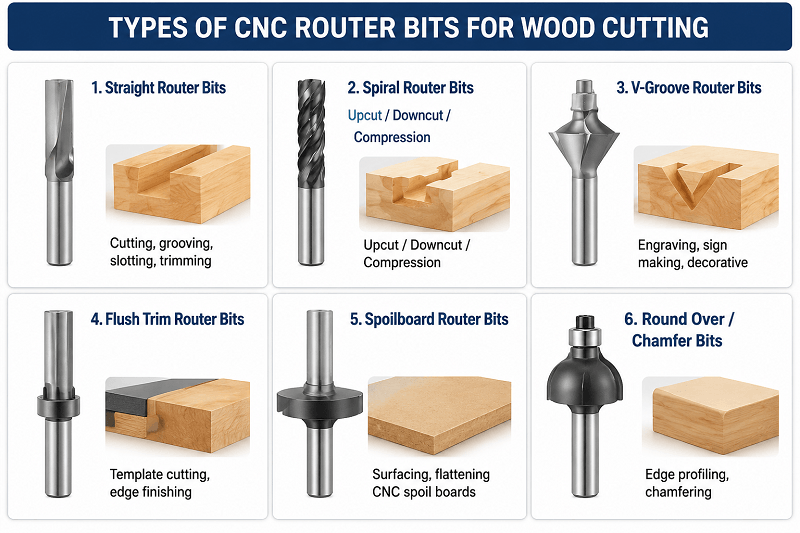
V-Groove Router Bits
V-groove router bits are designed for decorative and engraving applications.
They are commonly used for:
- Wooden signs
- Letter engraving
- Decorative patterns
- Custom designs
Their angled cutting edges allow manufacturers to create sharp and detailed engraving effects.
Flush Trim Router Bits
Flush trim router bits are mainly used for template cutting and edge finishing.
Common applications include:
- Copying template shapes
- Creating consistent edges
- Producing smooth finishing results
They are widely used in furniture manufacturing and custom woodworking projects.
Spoilboard Router Bits
Spoilboard router bits are specially designed for CNC table maintenance.
Their main applications include:
- Surfacing CNC tables
- Flattening MDF spoil boards
- Maintaining machining accuracy
These bits help ensure that CNC machines maintain a stable cutting surface during continuous production.
Carbide vs HSS CNC Router Bits for Wood
When selecting CNC router bits for woodworking, material quality plays an important role. Carbide and HSS are two common options.
| Feature | Carbide Router Bits | HSS Router Bits |
| Hardness | Higher | Lower |
| Tool Life | Longer | Shorter |
| Cutting Speed | Higher | Lower |
| Industrial Use | Excellent | Limited |
Carbide router bits are preferred for professional woodworking because they maintain sharp cutting edges longer and perform better under high-speed CNC machining conditions.
As a professional Carbide CNC Router Bits Manufacturer, Carbix Tools focuses on producing durable carbide cutting solutions for different woodworking applications.
How to Choose the Right CNC Router Bits for Wood?
Choosing suitable CNC router bits for wood depends on several important factors.
Consider Wood Material
Different materials require different cutting solutions:
- Hardwood → carbide spiral bits for durability and clean cutting
- MDF → compression bits for reducing edge damage
- Plywood → downcut or compression bits for better surface quality
Understanding material characteristics helps manufacturers achieve better machining results.
You can also learn more about selecting tools in our guide: How to Choose the Right Router Bit for Woodworking Projects.
How to Improve CNC Router Bit Performance in Woodworking?
Proper operation and maintenance can significantly extend router bit lifespan.
Use Correct Cutting Speed
Incorrect speeds may cause:
- Burning marks
- Poor surface finish
- Excessive tool wear
Maintain Proper Feed Rate
The correct feed rate ensures efficient cutting while preventing overheating and material damage.
Regular Tool Maintenance
Cleaning chips, checking cutting edges, and storing tools properly help maintain consistent performance.
Use High-Quality Carbide Tools
Premium carbide materials provide better durability and are especially valuable for continuous CNC woodworking production.
Why Choose Carbix Tools for CNC Router Bits for Wood?
Carbix Tools provides professional cutting solutions for woodworking manufacturers worldwide.
Our product range includes:
- Custom CNC router bits
- OEM and ODM router bit solutions
- Carbide material options
- Advanced surface coating choices
- Strict quality control processes
With experience in CNC cutting tool manufacturing, Carbix Tools helps customers select the right solutions for furniture, cabinet, woodworking, acrylic, and industrial applications.
Manufacturers looking for reliable suppliers can explore our Router Bit Sets collection or contact Carbix Tools for customized cutting solutions.
FAQs
Q1: What is the best CNC router bit for cutting wood?
A1: It depends on the material and finish required. Straight bits work well for general cutting, upcut spiral bits are best for solid hardwood, downcut spiral bits give a cleaner top surface on plywood and veneer, and compression bits produce clean edges on both sides of laminated panels.
Q2: Should I choose carbide or HSS router bits?
A2: Carbide router bits are generally the better choice for CNC woodworking. They hold a sharp edge longer, withstand higher cutting speeds, and are more suitable for continuous industrial production compared to HSS bits.
Q3: How often should CNC router bits be replaced?
A3: Replacement frequency depends on material hardness, cutting speed, feed rate, and production volume. Carbide bits typically last significantly longer than HSS bits, but regular inspection of the cutting edge is the best way to determine when a bit needs replacing.
Q4: Can CNC router bits be customized for specific production needs?
A4: Yes. Manufacturers with specific or high-volume requirements can request custom cutting geometry, tool dimensions, material selection, and coating options to improve efficiency and reduce production costs.
Conclusion
Choosing the right CNC router bits for wood is essential for achieving accurate cuts, smooth finishes, and efficient production. Carbide tools provide longer service life, while different router bit designs offer specific advantages for various woodworking applications.
Whether working with hardwood, MDF, plywood, or engineered materials, selecting the correct CNC router bits for woodworking can help manufacturers improve quality and reduce production costs.
Contact Carbix Tools today for customized CNC router bits designed for your woodworking applications.