
Router Bit Guide
How to Choose the Right Router Bit for Woodworking Projects
Jun-26-2026
Choosing the right router bit is one of the most important steps in achieving clean, accurate, and professional woodworking results. Whether you are working on furniture production, cabinetry, or CNC machining, the correct bit directly impacts cutting performance, surface quality, and tool life. This guide explains how to select the right router bit based on material, cutting function, geometry, and practical usage.

In this guide, you’ll learn:
- Importance of Selecting the Correct Router Bit
- Material Types and Their Requirements
- Matching Cutting Function to Application
- Understanding Router Bit Geometry
- Common Mistakes When Choosing Router Bits
- Professional Recommendations
- Custom Router Bits for CNC Applications
1. Importance of Selecting the Correct Router Bit
Router bits are not universal tools. Each bit is designed for specific cutting tasks, and using the wrong type can lead to poor results such as burning, tear-out, rough edges, or even tool damage.
A properly selected router bit ensures:
- Cleaner and smoother cuts
- Higher machining efficiency
- Longer tool lifespan
- Reduced material waste
- Improved overall precision
For both CNC machining and traditional woodworking, bit selection is a key factor in production quality and consistency.
2. Material Types and Their Requirements
Different materials require different cutting strategies. Understanding the workpiece is the first step in choosing the correct router bit.
Wood
Solid wood is relatively easy to cut but can vary in hardness and grain direction. Sharp carbide bits are recommended to reduce tear-out and burning.
MDF (Medium-Density Fiberboard)
MDF is dense and abrasive. It requires durable carbide-tipped or coated bits to maintain sharpness over long production runs. Compression bits are often used for clean edges.
Acrylic / Plastics
Plastics require smooth cutting action to avoid melting or chipping. Spiral router bits, especially up-cut or down-cut designs, help control chip removal and heat.
Aluminum (Light Metal Applications)
For soft metals like aluminum, specialized CNC router bits with polished flutes and high rigidity are required. Slow feed rates and proper chip evacuation are critical.
3. Matching Cutting Function to Application
Router bits are designed with different cutting functions. Choosing the correct function ensures optimal performance.
Straight Cutting
Used for general cutting, slotting, and edge trimming. Straight bits are versatile and commonly used in most woodworking tasks.
Grooving and Slotting
Groove Router Bits are ideal for creating channels, joints, and decorative lines.
Edge Shaping
Edge forming bits are used to create decorative profiles and smooth finishing edges.
Joinery Work
Joinery bits such as dovetail or mortise bits are designed for strong structural connections in furniture making.
3D Carving and Profiling
Ball nose and specialized carving bits are used for complex shapes, molds, and detailed engraving work.
Matching the cutting function to the project ensures accuracy and reduces rework.
4. Understanding Router Bit Geometry
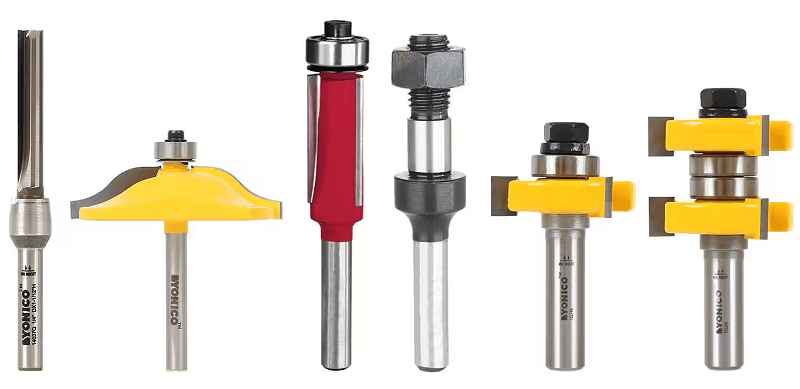
Router bit geometry plays a major role in cutting quality and tool performance.
Flute Design
- Single flute: better chip removal for plastics and aluminum
- Double flute: balanced performance for wood
- Multi-flute: smoother finish but slower feed rate
Cutting Edge Type
- Up-cut: excellent chip removal, but may cause top surface splintering
- Down-cut: cleaner top surface finish
- Compression: combines both for clean top and bottom edges
Bit Diameter
Larger diameter bits provide stability and smoother cuts, while smaller bits are better for detailed work.
Cutting Material
Carbide-tipped bits are the industry standard due to their durability, heat resistance, and long service life.
5. Common Mistakes When Choosing Router Bits
Many woodworking issues come from incorrect bit selection rather than machine problems. Common mistakes include:
- Using the same bit for all materials
- Ignoring feed rate and spindle speed compatibility
- Choosing incorrect flute types for the material
- Using worn or dull bits
- Selecting wrong bit size for the detail level required
Avoiding these mistakes can significantly improve both safety and output quality.
6. Professional Recommendations
Professionals in woodworking and CNC machining follow a few key rules when selecting router bits:
- Always match the bit type with the material
- Use carbide bits for long-term durability
- Keep a dedicated set for different applications (cutting, edging, carving)
- Replace or resharpen bits regularly
- Choose OEM-quality bits for consistent industrial performance
For production environments, investing in high-quality router bits reduces downtime and improves overall efficiency.
7. Custom Router Bits for CNC Applications
Custom router bits play an important role in CNC machining when standard tools cannot meet specific production requirements. They are designed and manufactured based on unique cutting needs, including special materials, non-standard profiles, or high-precision industrial applications.
In CNC environments, custom router bits can be optimized for cutting performance, tool life, and material compatibility. This includes adjustments in flute design, cutting-edge geometry, coating type, and bit diameter to ensure maximum efficiency and accuracy.
For professional manufacturers and OEM users, Custom Router Bits provide greater flexibility in production, helping improve machining consistency, reduce waste, and achieve complex design requirements. They are widely used in woodworking, industrial manufacturing, and precision engineering projects where standard router bits are not sufficient.
Conclusion
Selecting the right router bit is essential for achieving precise, clean, and efficient woodworking results. By understanding material properties, cutting functions, bit geometry, and common usage mistakes, both beginners and professionals can significantly improve their machining quality. A well-chosen router bit not only enhances performance but also extends tool life and ensures consistent production results.