
Router Bit Guide
CNC Router Bits for Furniture Manufacturing: Types, Applications, and Selection Tips
Jul-07-2026
A practical guide to choosing the right CNC cutting tools for precision, consistency, and efficiency across every stage of furniture production.
In this guide, you’ll learn:
- Furniture Production Requirements for CNC Router Bits
- Recommended Router Bit Types for Furniture Manufacturing
- Edge Finishing Tools for Furniture Components
- Joinery Tools for Furniture Manufacturing
- OEM Supply Advantage for Furniture Manufacturers
- Conclusion

Furniture manufacturing requires precision, consistency, and efficiency throughout every stage of production. From cabinet components and wooden panels to custom furniture designs, CNC machining has become an essential manufacturing process for achieving accurate dimensions and high-quality finishes.
However, the performance of a CNC machine depends heavily on selecting the right cutting tools. Among these tools, CNC Router Bits play a critical role in determining machining accuracy, surface quality, production speed, and overall manufacturing efficiency. Different furniture applications require different cutting solutions, making proper router bit selection an important factor for professional manufacturers.
For a complete overview of router bit selection principles, explore our guide: CNC Router Bits Guide: Types, Materials, and How to Choose the Right Bit.
Furniture Production Requirements for CNC Router Bits
Modern furniture manufacturing requires router bits that can maintain consistent performance during continuous CNC operations. Unlike small woodworking projects, industrial furniture production involves thousands of repeated cutting cycles where even minor variations can affect product quality.
The right router bits should meet several key requirements:
Precision Cutting Accuracy
Furniture components require tight dimensional tolerances, especially for parts that need to fit together during assembly. CNC router bits must provide clean and accurate cuts for panels, joints, and decorative features without excessive vibration or material damage.
Production Consistency
Large-scale furniture manufacturers rely on repeatable machining results. A high-quality router bit should maintain stable cutting performance throughout extended production runs, reducing tool replacement frequency and minimizing production interruptions.
Surface Finishing Standards
The final appearance of furniture depends heavily on machining quality. Poor cutting performance can create rough edges, burn marks, or additional sanding requirements.
CNC Workflow Requirements
Furniture factories often use automated CNC routing systems for nesting, drilling, profiling, and engraving operations. Router bits must support different machining processes while providing efficient chip removal, long service life, and compatibility with materials including MDF, plywood, hardwood, and laminated boards.
Recommended Router Bit Types for Furniture Manufacturing
Different furniture applications require different cutting tools. The most commonly used router bits for furniture production include spiral router bits, compression bits, and straight router bits.
Spiral Router Bits
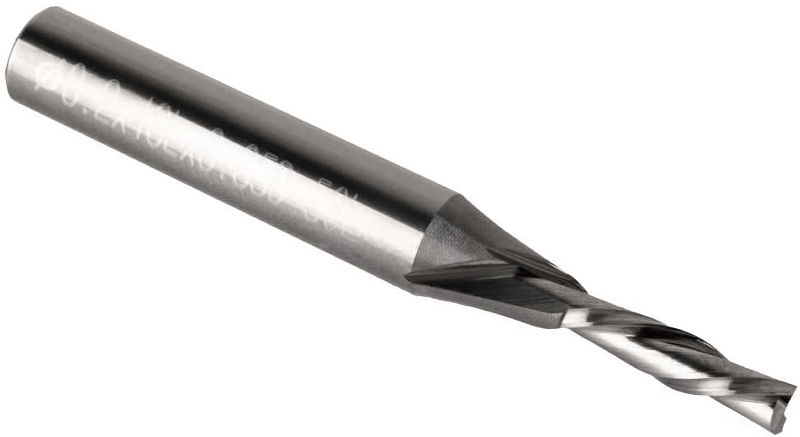
Spiral router bits are widely used in CNC furniture manufacturing because of their efficient cutting performance and excellent surface finish. Their helical cutting design allows smoother material removal compared with traditional straight cutting edges.
Common applications include:
- Cutting wooden panels
- Processing MDF and plywood
- CNC nesting operations
- Manufacturing precision furniture components
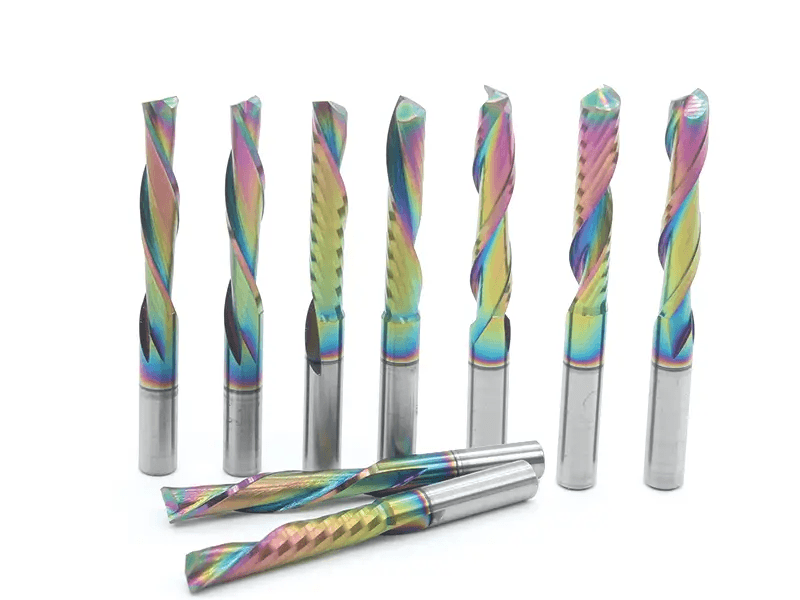
Upcut spiral bits provide excellent chip removal for deeper cuts, while downcut spiral bits help achieve cleaner top surfaces. For high-volume furniture production, Spiral Router Bits offer reliable performance and consistent machining results.
Straight Router Bits
Straight router bits are among the most versatile cutting tools used in woodworking and furniture production. They are commonly used for basic material removal, groove cutting, and general routing operations.
Typical applications include:
- Groove cutting
- Dado operations
- Rough machining processes
Although straight bits may not provide the same finishing performance as spiral tools, they remain valuable for applications where stability, simplicity, and cost efficiency are important.
Edge Finishing Tools for Furniture Components
Edge quality plays an important role in furniture appearance, durability, and customer satisfaction. CNC edge finishing tools allow manufacturers to create accurate profiles while maintaining consistency across large production batches.
Round-Over Router Bits
Round-over bits create smooth curved edges on furniture components. They are commonly used for:
- Table edges
- Cabinet doors
- Decorative furniture surfaces
These tools improve both appearance and user comfort by removing sharp corners and creating refined edge profiles.
Edge Profiling Applications — Edge profiling tools allow CNC machines to create customized shapes and decorative finishes. In furniture manufacturing, consistent edge profiles are essential for maintaining product appearance across high-volume production.
Manufacturers can also explore different CNC woodworking applications to understand how router bits are applied across various industrial production environments.
Joinery Tools for Furniture Manufacturing
Strong furniture construction depends on accurate and durable joints. CNC router bits allow manufacturers to automate traditional woodworking techniques while improving repeatability and production efficiency.
Common joinery applications include:
Mortise and Tenon Joints
Mortise and tenon joints provide strong mechanical connections for furniture frames. CNC machining allows these joints to be produced with high accuracy and consistent dimensions.
Dovetail Joints
Dovetail router bits are commonly used for drawers, cabinets, and decorative furniture structures. Their precision helps create tight-fitting connections with excellent durability.
Tongue and Groove Connections
Tongue and groove joints are widely used in panel assembly and furniture construction. CNC router bits enable manufacturers to produce consistent connections across large production volumes.
Choosing the correct joinery router bits helps furniture manufacturers reduce assembly problems, improve structural strength, and maintain consistent product quality.
OEM Supply Advantage for Furniture Manufacturers
For furniture manufacturers and OEM suppliers, working with a reliable router bit manufacturer provides advantages beyond standard tooling availability.
Carbixtools provides custom router bit solutions designed according to specific machining requirements. Customized options include:
- Different cutting geometries
- Various carbide material grades
- Customized dimensions
- Application-specific tooling designs
High-quality carbide materials improve durability and cutting stability, while strict quality control ensures every tool meets manufacturing requirements.
For companies requiring large-scale production support, bulk router bit supply capabilities help maintain stable inventory and consistent machining performance across multiple production lines.
Conclusion
Selecting the right router bit for furniture manufacturing requires understanding material characteristics, cutting methods, production requirements, and finishing expectations.
Spiral router bits, compression bits, straight bits, edge finishing tools, and joinery cutters each provide unique advantages for different CNC Woodworking Applications. With professional tooling solutions, custom manufacturing capabilities, and reliable production support, Carbixtools helps furniture manufacturers build more efficient and dependable CNC machining workflows.