
Router Bit Guide
CNC Router Bit Types Explained: Straight, Spiral, and Specialty Bits for Precision Machining
Jun-30-2026
The right CNC router bits can significantly improve machining accuracy, surface finish, and overall production efficiency. From surface finish quality and chip evacuation to tool life and production consistency — bit selection determines outcomes. This guide breaks down the major router bit categories so you can match the right tool to every application.
In this guide, you’ll learn:
- Overview of CNC Router Bit Categories
- Straight Router Bits
- Spiral Router Bits
- Joinery Router Bits
- Edge Router Bits
- Specialty Bits: V-Groove & Engraving
- Molding Router Bits
- Industrial Applications
- Conclusion
Overview of CNC Router Bit Categories
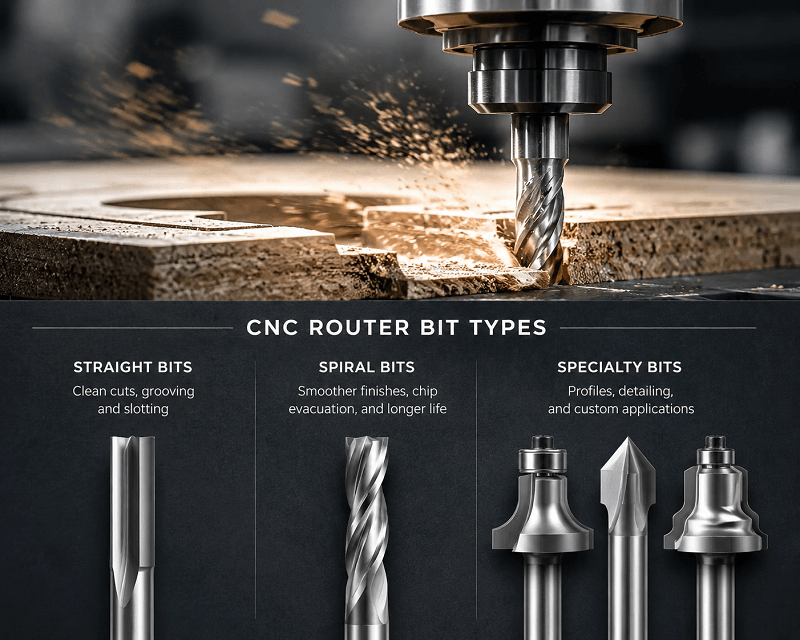
CNC Router Bits are classified into functional categories based on cutting geometry and intended application. Each category addresses a specific machining requirement — from rapid material removal to fine decorative profiling.
- Straight Bits: Fast material removal, slotting, and dado cuts. The most traditional cutting geometry.
- Spiral Bits: Helical cutting edge for reduced vibration, superior chip evacuation, and finer surface finish.
- Joinery Bits: Structural woodworking connections: mortise and tenon, dovetail, tongue and groove.
- Edge Bits: Profile and refine outer contours — rounding, beveling, chamfering.
- Specialty Bits: V-groove and engraving tools for signage, lettering, and 3D surface detailing.
- Molding Bits: Complex contour profiles for furniture trims, cabinet frames, and architectural moldings.
For a full technical breakdown covering materials, coatings, and selection principles, refer to our in-depth resource: CNC Router Bits Guide: Types, Materials, and How to Choose the Right Bit.
Straight Router Bits
Straight router bits are the most traditional and widely used CNC cutting tools. They feature a simple straight cutting edge optimized for fast material removal and straightforward groove cutting.
Common Applications
- Slotting and dado cuts
- Basic edge trimming
- Roughing passes before finishing operations
Their primary advantages are mechanical simplicity, stability, and cost-efficiency. Because the cutting geometry does not prioritize chip evacuation, straight bits can generate more heat and typically require slower feed rates in dense materials such as hardwood or thick MDF.
In CNC woodworking workshops, straight bits are often used in initial machining stages before a tool change to finishing tools such as spiral or compression bits for final surface quality.
Spiral Router Bits
Spiral router bits are engineered for improved cutting efficiency and superior surface finish. Unlike straight bits, the helical cutting edge continuously shears material rather than chopping it — reducing vibration, improving chip removal, and producing cleaner results with less thermal buildup.
Three Types of Spiral Bits
- Upcut spiral bits — excellent chip evacuation; ideal for deep cuts and through-cuts
- Downcut spiral bits — cleaner top surface finish; preferred for veneered panels
- Compression spiral bits — combines upcut and downcut geometry; optimized for laminated materials and double-sided finish requirements
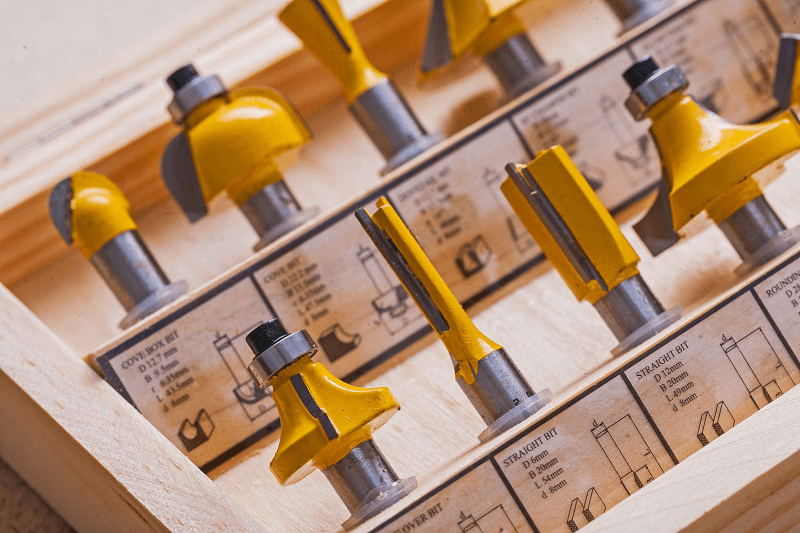
Industrial Note
In automated CNC production lines, spiral bits significantly reduce tool wear and improve cutting consistency — especially when processing large volumes of MDF and plywood panels. For furniture manufacturers prioritizing throughput and finish quality, spiral bits are the standard choice.
For a deeper comparison of upcut vs. downcut vs. compression performance across material types, see our guide: How to Choose the Right Router Bit for Woodworking Projects.
Joinery Router Bits
Joinery router bits are designed for structural connections in woodworking — the joints that give furniture and cabinetry its mechanical strength. These tools are essential for producing tight-fitting connections at scale.
Common Joinery Applications
- Mortise and tenon joints
- Dovetail joints
- Tongue and groove connections
In CNC production environments, joinery bits help automate traditionally manual woodworking processes, improving repeatability and reducing assembly errors across large batch runs. Carbixtools joinery bits are precision-ground for consistent fitting accuracy — critical in mass furniture manufacturing and modular wood systems.
Edge Router Bits
Edge router bits shape and refine the outer contours of workpieces. In both woodworking workshops and industrial furniture production, edge finishing is a key determinant of aesthetic quality and tactile safety — and CNC edge profiling ensures that result is identical across every piece in a batch.
Typical Edge Operations
- Rounding edges (round-over bits)
- Beveling and chamfering
- Decorative profile trimming
In high-volume furniture production lines, consistency in edge finish directly impacts perceived product quality. CNC automation eliminates the variation that manual edge routing introduces, particularly on long-run production of panel furniture components.
Specialty Bits: V-Groove & Engraving
Specialty router bits are designed for detailed engraving, signage production, and decorative surface machining. Among them, V-groove bits and engraving bits are the most commonly deployed in CNC woodworking applications requiring sharp detail and fine geometry.
Applications
- Sign engraving and lettering
- Decorative panel carving
- 3D surface detailing
V-groove bits are the standard tool in CNC sign-making industries, while engraving bits are preferred for fine-detail machining on wood, acrylic, and soft metals. These tools require high spindle precision and are typically used at higher RPMs to achieve clean, sharp detail edges without tearing material.
Molding Router Bits
Molding router bits create decorative profiles and complex contours for furniture trims, architectural moldings, and ornamental edges. Because molding operations require consistent shaping across extended production runs, CNC automation is the natural fit — it eliminates dimensional drift and reduces manual finishing time significantly.
Common Molding Uses
- Cabinet face frames
- Decorative furniture components
- Interior architectural woodwork
Carbixtools molding bits are engineered for smooth cutting performance, minimizing burn marks and reducing post-processing requirements in high-throughput environments.
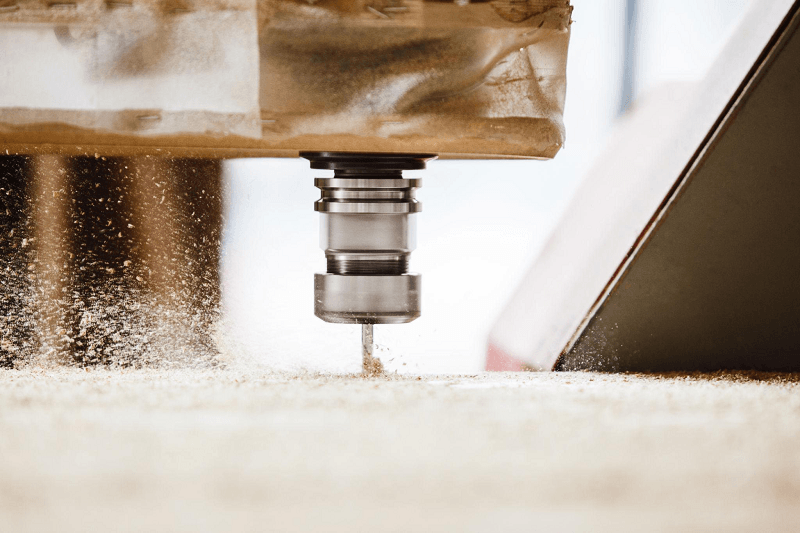
Industrial Applications
CNC Router Bits from Carbixtools are deployed across multiple industrial sectors where precision cutting, repeatability, and continuous-duty performance are non-negotiable. Explore the full range of CNC Woodworking Applications supported by Carbixtools tooling.
| Industry | Primary Bit Types | Key Requirements |
| Woodworking Workshops | Straight, spiral, edge | Versatility across species and thicknesses; consistent surface finish |
| Furniture Manufacturing | Joinery, spiral, compression | Batch consistency, joint accuracy, laminate-safe cutting |
| CNC Production Lines | All types (rotation-based selection) | Tool durability, cutting stability, continuous operation support |
| Sign & Display | V-groove, engraving | Fine detail geometry, acrylic and soft-metal compatibility |
| Architectural Millwork | Molding, edge | Complex profile repeatability, burn-mark-free output |
In automated CNC production environments, tool durability and cutting stability are especially critical. Carbixtools router bits are designed for continuous industrial operation, supporting large-scale manufacturing workflows without compromising tolerance or surface quality over extended tool life.
Conclusion
Understanding CNC router bit types is essential for optimizing machining performance across woodworking and industrial applications. From straight bits for basic material removal to compression spirals for laminated panel finishing, each tool serves a distinct function — and the right combination directly drives efficiency, surface quality, and production consistency.
For more technical guidance, explore these Carbixtools resources: